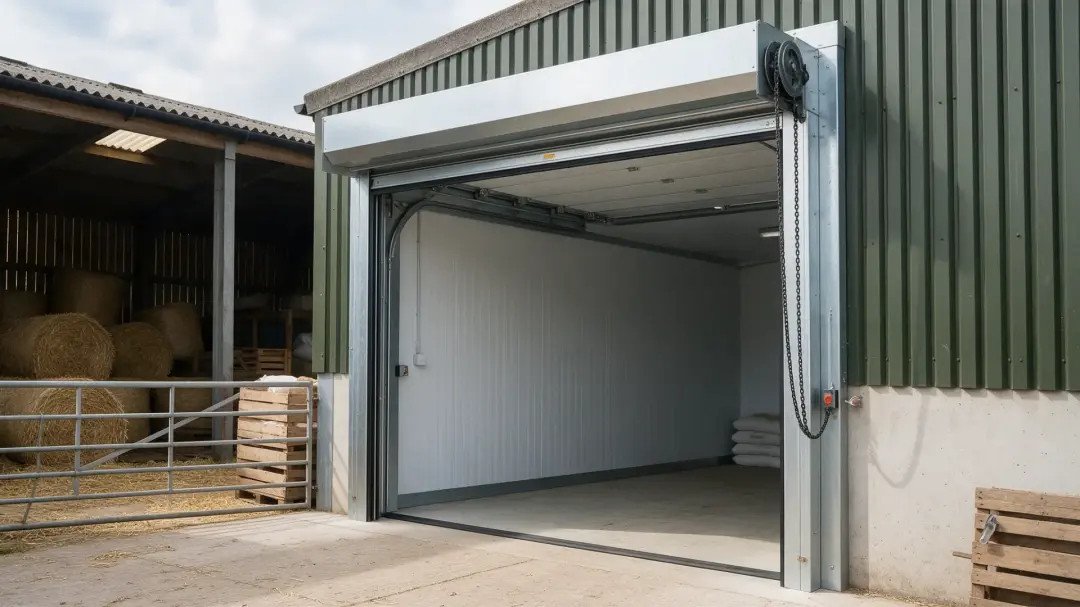
Agricultural doors face frequent use, heavy equipment and exposure to the weather, so their lifespan can vary considerably. Materials, installation quality and routine maintenance all affect how well they hold up. Kno wing what to expect from different doors can help you plan for repairs, spot wear early and choose an option that offers lasting value.
Agricultural Doors Life-Cycle
HSE lists 22 worker fatalities in agriculture, forestry and fishing in Great Britain in 2025/26. This is not a door-specific statistic, but it is a reminder that defective equipment and unsafe shortcuts should never become routine. Source for this statistic.
There is no reliable number of years that fits every agricultural door. Daily cycles, seasonal peaks, impacts, weather and maintenance can matter more than age. A sound door can often be repaired; recurring faults or an opening that no longer suits the work may justify replacement.
Count cycles, not only years
One complete opening and closing is one cycle. A door used twelve times on 250 days completes about 3,000 cycles a year, whereas a seasonal store may see a fraction of that. Ask what duty the curtain, motor, guides, drive and controls are designed to handle, then record normal and peak use rather than relying on calendar age.
Consider the environment
Wind, rain, standing water, dust, mud, straw, wash-down and livestock atmospheres can all affect different parts of a door assembly. Specify suitable finishes and seals, keep drainage clear and repair coating damage early. Conditions at a farm may shorten the life of components that would last well indoors.
Prevent impacts
Vehicle contact can bend guides, damage bottom rails, dislodge fixings or distort the opening before the main door components are otherwise worn. Use markings, mirrors, barriers and sensible routes. If a door is misaligned after an impact, stop forcing it through cycles and arrange a competent inspection.
Inspect the supporting structure
A door depends on the opening that carries it. Loose fixings, weak cladding, a failing lintel or uneven threshold can change alignment and increase strain. Include the surrounding structure in maintenance checks. Replacing a motor or curtain will not solve a recurring issue caused by movement in the building.
Maintain the full assembly
Guides, hinges or barrel, springs, controls, locks, seals, safety edges and fixings can age at different rates. Follow manufacturer guidance, retain service records and ask users to report noise, dragging, slow movement, gaps or water ingress before a small defect becomes a breakdown.
Match servicing to use
A door opened throughout a shift needs a different service plan from one used twice daily, and seasonal peaks may change the real duty unexpectedly. Review the plan after expansion, new machinery or a change of building use. User checks and competent maintenance should complement each other.
Keep a fault history
Installation documents, repairs, impact reports and recurring symptoms help a technician distinguish a one-off failure from a pattern. Record dates, operating conditions and parts replaced. This shows whether the cause is workload, environment, poor alignment or a vehicle route that needs attention.
Assess repair objectively
A targeted repair can be sensible when the structure and main assembly are sound and the failed part is available. Ask for a whole-system assessment. A faulty control does not mean the complete door has expired, just as a new curtain cannot correct bent guides.
Recognise replacement signals
Replacement becomes more persuasive when damage is extensive, breakdowns recur, parts are obsolete, security is inadequate or the opening no longer suits machinery. Compare repair cost, expected reliability, disruption, warranty and the opportunity to correct the underlying issue rather than simply restoring an unsuitable old arrangement.
Make the next door last
A long service period starts with specification for the real environment and peak use, followed by correct operation and timely maintenance. Protect the approach from impacts, train users and arrange servicing from installation. Suitability and condition are more meaningful than a universal promise of a fixed number of years.
Signs and habits that affect service life
- Look for early warning signs: New noise, uneven travel, scraping, delayed response, vibration and a gap at the floor are useful signals. Reporting them early can prevent a small adjustment becoming a major repair.
- Do not force a fault: Repeatedly operating a jammed or misaligned door can damage guides, motors and safety components. Isolate it where appropriate and arrange a competent inspection.
- Protect controls from the environment: Water, dust, rodents and accidental contact can affect controls and wiring before a visible problem appears. Keep enclosures intact and do not improvise electrical repairs.
- Review motor duty after expansion: A motor chosen for occasional access may be unsuitable after a building becomes a busy workshop or packing area. Changes in cycles can matter more than the door’s age.
- Check seals as consumable parts: Brushes, rubber seals and weather strips can wear before the main door. Replacing them at the right time can restore weather protection and reduce strain on the assembly.
- Use safe cleaning practices: Remove mud and debris from guides and thresholds in line with instructions, but avoid methods or chemicals that damage coatings, seals or electrical equipment.
- Plan around seasonal workload: Schedule servicing before the period when access is critical, not during it. Harvest, feeding and lambing schedules should influence maintenance timing.
- Value professional diagnosis: A trained technician can distinguish between alignment, structural movement, electrical faults and worn parts. This avoids replacing the wrong component or missing a safety issue.
- Choose replacement specification carefully: If replacement is necessary, use the old door’s failures as evidence. Correct clearance, duty, traffic, security or environment issues instead of duplicating an unsuitable specification.
Door-life and maintenance checklist
- Estimate normal and peak opening cycles rather than judging condition only by the installation date.
- Check for scraping, vibration, noise, slow response, uneven travel and gaps at the floor.
- Inspect guides, hinges, barrels, springs, controls, locks, seals and safety devices as one system.
- Look for water, mud, straw and debris that can obstruct movement or accelerate corrosion.
- Report vehicle contact immediately, even when the door appears to continue operating afterwards.
- Inspect lintels, cladding, fixings and thresholds because structural movement can cause misalignment.
- Keep a log of faults, repairs, impacts and replaced parts with dates and symptoms.
- Schedule servicing before harvest, lambing, feeding or other periods when access is critical.
- Check whether new machinery or changed building use has increased the duty on the motor.
- Replace worn seals and damaged coatings before they permit water ingress or recurring strain.
- Request a whole-system diagnosis before assuming a fault requires complete replacement.
- Use the old door’s failures to improve the size, duty, environment rating and traffic protection of its replacement.
Plan downtime before it is urgent
Every farm has periods when a doorway is especially important. If a service, repair or replacement is needed, schedule it before that critical window where possible and agree how machinery, feed, livestock or deliveries will be handled while the opening is unavailable. This prevents a maintenance issue becoming an unsafe workaround, such as leaving a damaged door raised or repeatedly forcing it. Ask the contractor what access, power and preparation will be needed, and keep a contingency route in mind for buildings with only one practical entrance. Good planning cannot eliminate faults, but it can sharply reduce their operational impact.
What to do next
Judge the door by its condition, duty and repair history rather than its installation date alone. A technician can assess the whole assembly and supporting structure, then help decide whether a targeted repair or a better-specified replacement offers more reliable access.
KGC Doors offer bespoke design and installation for agricultural doors in Wolverhampton, Birmingham, Derby and across the Midlands. Discuss the opening and daily use with an experienced installer.