Why Energy Efficiency Matters in Commercial Buildings
Energy efficiency has a direct effect on commercial operating costs. Warehouses, workshops, distribution centres and manufacturing facilities may require substantial energy to maintain suitable indoor temperatures, particularly when they contain large external openings. If heat repeatedly escapes through a poorly performing door, the heating system must run for longer and consume more energy to restore the desired temperature.
Temperature control also influences working conditions. Employees positioned near a draughty loading-bay or workshop door may experience cold air movement even when the building’s average temperature appears acceptable. Improving the thermal performance of the opening can reduce uncomfortable cold zones, support a more consistent internal environment and make work areas easier to use throughout the year.
Energy efficiency can be equally important in warm conditions. Refrigerated buildings must prevent heat from entering, while air-conditioned premises need to limit the movement of warm, humid outdoor air into controlled spaces. An insulated, properly sealed door therefore helps protect both heated and cooled environments rather than serving only as a winter energy-saving measure.
Reducing unnecessary energy use can also support an organisation’s environmental objectives. Lower demand for heating or cooling may reduce associated carbon emissions, depending on the building’s energy source. Door improvements can form part of a wider efficiency programme that includes better insulation, efficient lighting, equipment controls and improvements to the building envelope.
How Sectional Overhead Doors Reduce Heat Transfer
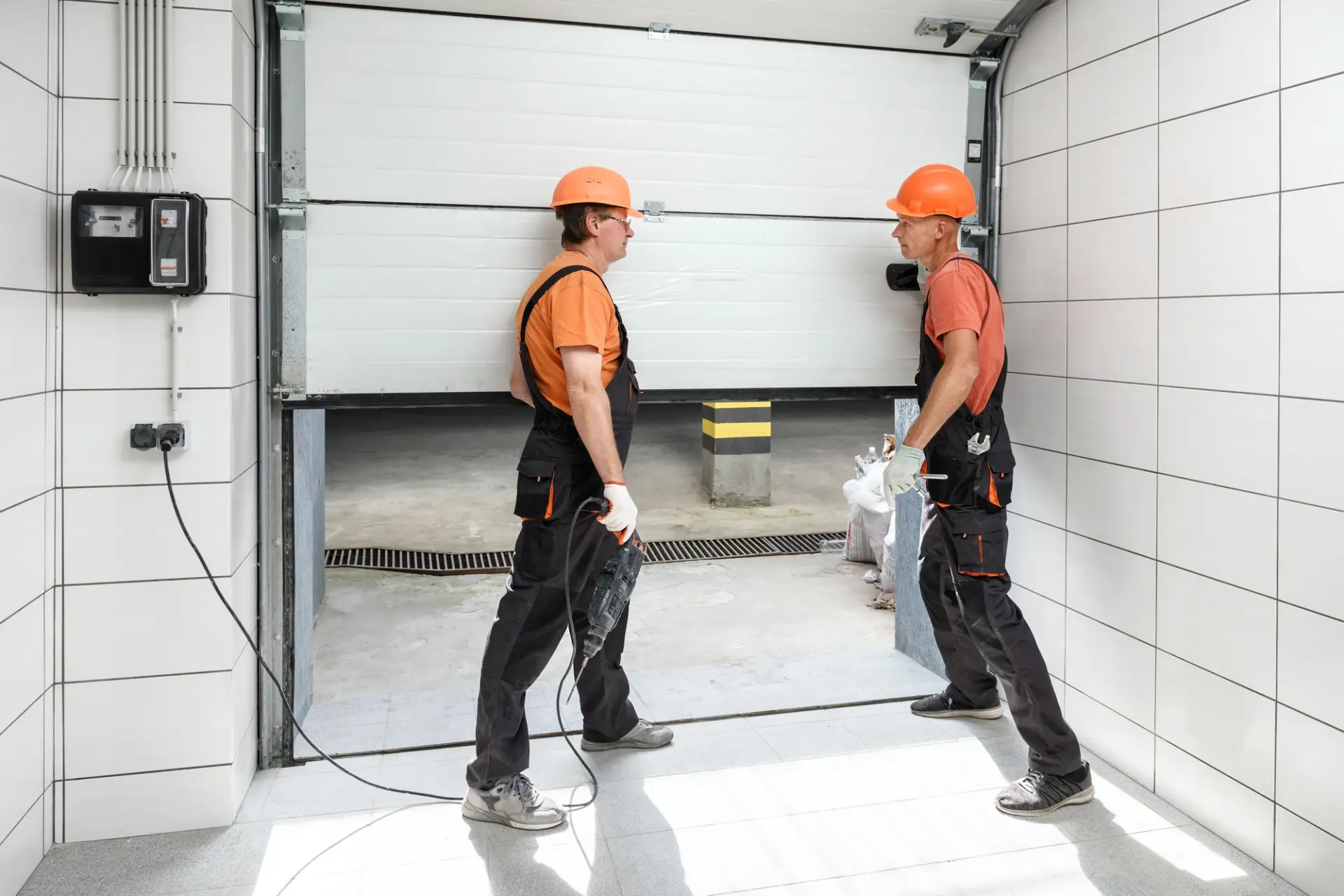
A sectional overhead door is formed from a series of horizontal panels joined by hinges. When the door opens, the panels travel along tracks and generally move overhead, leaving the doorway clear. When closed, the panels form a continuous barrier across the opening, helping to separate the controlled interior from outdoor conditions.
Insulated sectional panels slow heat transfer through the door surface. A typical insulated panel contains internal and external metal skins separated by an insulating core. The core reduces the rate at which heat passes between the two faces, producing better thermal performance than a basic single-skin metal door.
The connections between sections are also important. Well-designed panel joints fit closely together and may incorporate insulating breaks or shaped profiles that lengthen the path through which heat must travel. They must maintain this connection while allowing the panels to articulate as the door moves around the tracks.
Because sectional doors are manufactured in individual panels, they can provide insulation across large industrial openings without requiring a single heavy leaf. This makes them suitable for premises that need both thermal separation and regular vehicle access. Their performance, however, depends on the entire door assembly rather than the insulated panels alone.
Understanding Insulated Door Panels and U-Values
A U-value describes the rate of heat transfer through a building element. It is normally expressed in watts per square metre kelvin, or W/m²K. A lower U-value indicates that less heat passes through the measured area under the same temperature difference, so lower values generally represent better insulating performance.
Buyers should establish whether a quoted U-value applies to an individual panel or to the complete installed door. A panel-only value may appear impressive because it does not include joints, edges, seals, frames, tracks or glazing. The value for the complete door assembly provides a more representative basis for comparing products intended for a real opening.
Panel thickness can influence performance, but thickness alone is not a reliable comparison. The type, density and continuity of the insulating material also matter, as does the construction of the panel edges. Two doors with panels of similar depth may therefore have different thermal properties.
The required U-value should be considered alongside door size, usage and internal temperature. A highly insulated door can offer meaningful benefits in a temperature-controlled facility, but its potential will not be realised if the door remains open unnecessarily or has damaged seals. Selection should address conduction through the panels and operational energy losses together.
The Importance of Effective Seals Around the Door
Perimeter seals close the small gaps that must exist between a moving door and the surrounding structure. These usually include a bottom seal, side seals and a seal across the head of the opening. Together, they help prevent air, rain, dust and debris from passing around the edges when the door is closed.
The bottom edge is particularly challenging because industrial floors may be uneven, worn or sloped for drainage. A flexible bottom seal can conform to minor irregularities, but it cannot compensate for serious changes in floor level. The threshold and door should therefore be assessed together during specification and installation.
Side and head seals must maintain suitable contact without creating excessive resistance to movement. If they are poorly positioned, they may leave gaps or wear rapidly. Correct adjustment allows them to remain in contact with the relevant door surfaces while the panels continue to move freely and safely.
Seals are replaceable components and should be included in routine maintenance. Repeated operation, sunlight, dirt, moisture and accidental impact can cause them to become brittle, compressed or torn. Inspecting these components allows deterioration to be addressed before it leads to persistent air leakage and higher energy consumption.
Preventing Draughts and Uncontrolled Air Leakage
Draughts occur when air passes through gaps in the building envelope because of wind pressure, temperature differences or the operation of mechanical ventilation. A small gap around a large commercial door can admit a substantial volume of air, particularly on an exposed elevation.
Uncontrolled infiltration places an additional load on heating and cooling systems. Cold incoming air must be warmed during winter, while warm or humid air may require cooling and dehumidification during summer. This air exchange can increase energy demand even when the door panels themselves have a good insulating value.
Air movement can also carry dust, fumes, moisture and insects into the building. In premises used for manufacturing, food handling, storage or finishing work, these contaminants may affect processes and products as well as energy efficiency. Controlling leakage therefore supports cleanliness and operational quality.
Preventing draughts requires attention to the junction between the door and the building. Cracks in masonry, distorted frames and poorly finished interfaces can undermine the performance of the door seals. Sealing these adjoining areas and maintaining suitable pressure balance within the building can improve the effectiveness of the complete installation.
How Faster Opening and Closing Reduces Energy Loss
Whenever an external door opens, indoor and outdoor air begin to mix. Warm air may escape through the upper part of the opening while colder, denser air enters below. The longer the doorway remains open, the greater the opportunity for this exchange to disturb the internal temperature.
A powered sectional door can reduce open time by completing each operating cycle promptly and consistently. The actual benefit depends on the door’s travel speed, height and control system. Opening speed should be assessed together with safe operation, because faster movement must not compromise the protection of people, vehicles or equipment.

Efficient controls can be more important than maximum mechanical speed. A door that opens quickly but remains fully raised for several minutes may still waste considerable energy. Automatic closing timers, presence detection and carefully selected hold-open periods can reduce the time during which the opening is exposed.
Busy doorways may require a different strategy from occasional-use entrances. In a high-traffic logistics facility, a dedicated high-speed internal or external door may sometimes be appropriate, while a sectional door provides insulation and security when traffic is lower. Examining actual movement patterns helps determine the most effective arrangement.
Choosing the Right Insulation Level for Your Premises
The first consideration is the temperature difference the door must regularly withstand. A door separating a heated workshop from winter conditions usually needs more insulation than a door fitted to an unheated equipment store. Refrigerated or tightly controlled environments may require a more specialised assembly.
The frequency of operation must also be considered. For a door that remains closed for most of the day, improving its U-value can significantly reduce steady heat transfer. If a doorway opens every few minutes, controls, opening duration and traffic management may have an equally strong influence on total energy performance.
Climate and exposure affect the appropriate specification. A door on a sheltered internal elevation faces different conditions from one exposed to strong wind and driving rain. Coastal, elevated and highly exposed sites may require enhanced weather sealing, corrosion protection and structural resistance in addition to insulation.
A whole-life assessment is more useful than choosing solely on initial price. It can take account of purchase and installation costs, expected energy savings, maintenance requirements, operating reliability and service life. This approach helps prevent both under-specification and unnecessary spending on insulation that offers little practical benefit in the intended setting.
The Impact of Glazed Panels and Vision Windows
Vision windows admit daylight and allow employees to see approaching people or vehicles. This can support safety, reduce dependence on electric lighting near the entrance and make an industrial space feel less enclosed. Their placement should correspond with the sightlines of the people who will use the doorway.
Glazing generally transfers more heat than a well-insulated opaque panel. The extent of the difference depends on the glazing material, the number of layers, the spacer system and the surrounding frame. Large areas of basic single glazing can therefore reduce the overall thermal performance of the door.
Insulated or multiwall vision panels can provide a compromise between visibility and energy conservation. Their performance should be considered as part of the complete door rather than judged separately. Buyers should request whole-door thermal data for the selected glazing configuration because adding windows can change the declared value.
The location and quantity of glazing should be chosen deliberately. A limited number of well-positioned windows may provide adequate visibility without creating unnecessary heat-transfer area. Durability, scratch resistance, cleaning requirements and the likelihood of accidental impact should also influence the final design.
How Correct Installation Improves Thermal Performance
Even a high-quality insulated door can perform poorly if the opening is measured incorrectly. Accurate dimensions are needed for the door leaf, guides, tracks and seals to align as intended. The survey should also identify uneven floors, out-of-square openings, overhead obstructions and unsuitable fixing surfaces.
The frame must be installed plumb, level and securely fixed. Misalignment can cause uneven seal compression, excessive friction and gaps at the panel edges. It may also place additional strain on rollers, hinges and the operating mechanism, eventually affecting reliability.
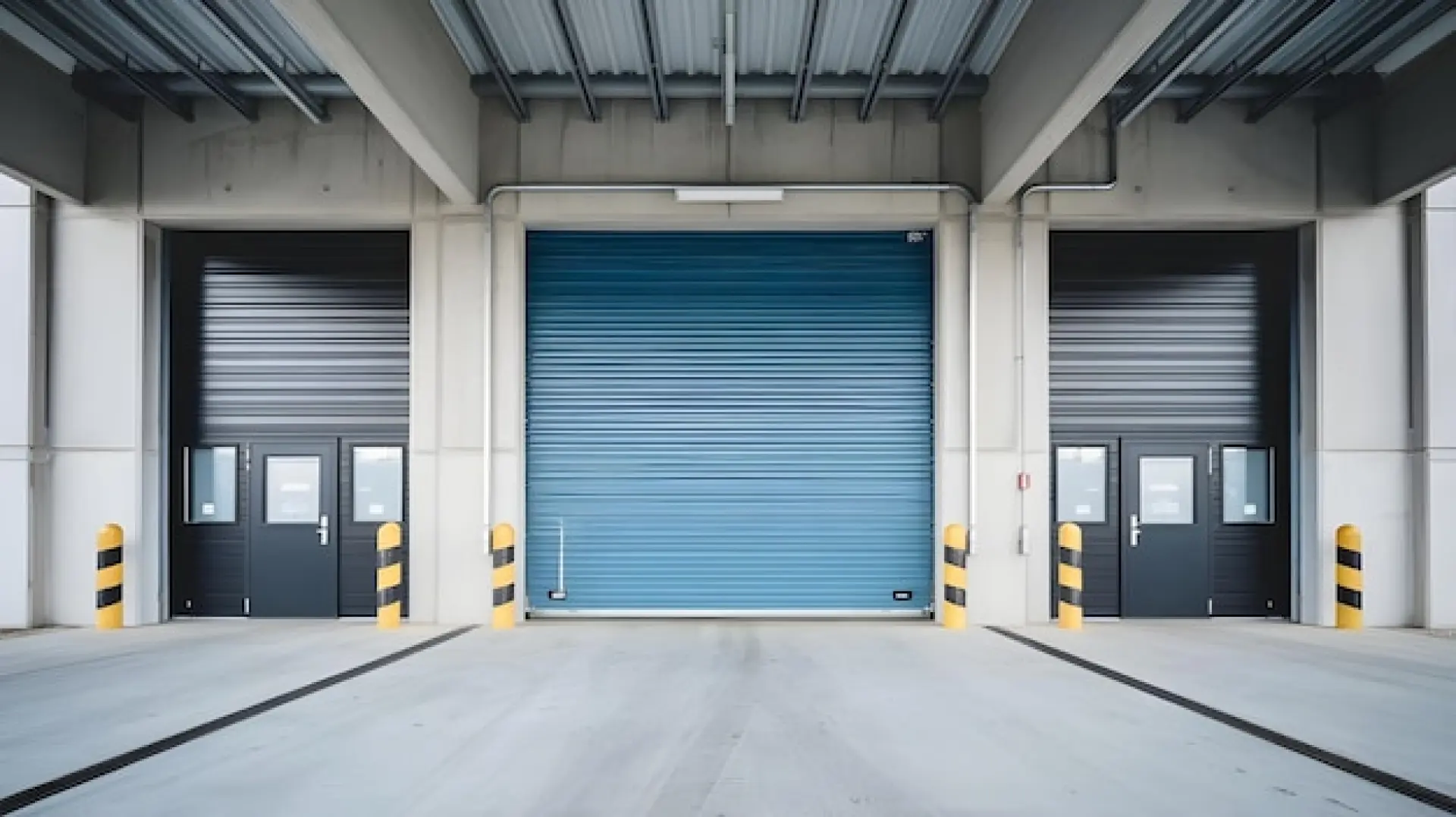
The interface between the door components and the surrounding wall requires careful finishing. Gaps behind guides, frames or head assemblies may create hidden air-leakage paths. Suitable sealing and insulation around these junctions can prevent the thermal performance of the opening from being weakened at its perimeter.
Commissioning provides an opportunity to confirm that the door closes fully, the sections meet correctly and the seals make consistent contact. Safety devices, opening limits and closing limits should also be tested. Retaining installation records and arranging periodic servicing helps ensure that the original performance does not decline unnoticed.
Using Automated Controls, Sensors and Timers
Automated controls allow the door to respond to actual traffic instead of relying entirely on users. Remote controls, wall-mounted switches, pull cords and vehicle detection systems can initiate opening at the appropriate moment, helping vehicles pass through without avoidable waiting.
Presence sensors can detect people or vehicles within the operating area. When correctly selected and configured, they support safe closing while allowing the door to shut soon after the opening becomes clear. Sensor coverage must suit the doorway geometry and the types of traffic using it.
Timers can prevent a door from remaining open because someone forgot to close it. The delay should be long enough for normal activity to finish safely but short enough to limit energy loss. Different operating schedules may be useful during busy shifts, quieter periods and overnight operation.
Automation should be integrated with safety, security and emergency procedures. Controls need regular inspection, and staff should understand how to operate the door and report faults. A dependable automated system combines energy-conscious timing with obstruction detection, manual overrides and suitable access control.
KGC Doors specialises in the supply, installation, and maintenance of high-quality doors for businesses across Wolverhampton, Birmingham, Derby and the Midlands. We have years of experience and can provide secure, durable, and energy-efficient doors tailored to your business.