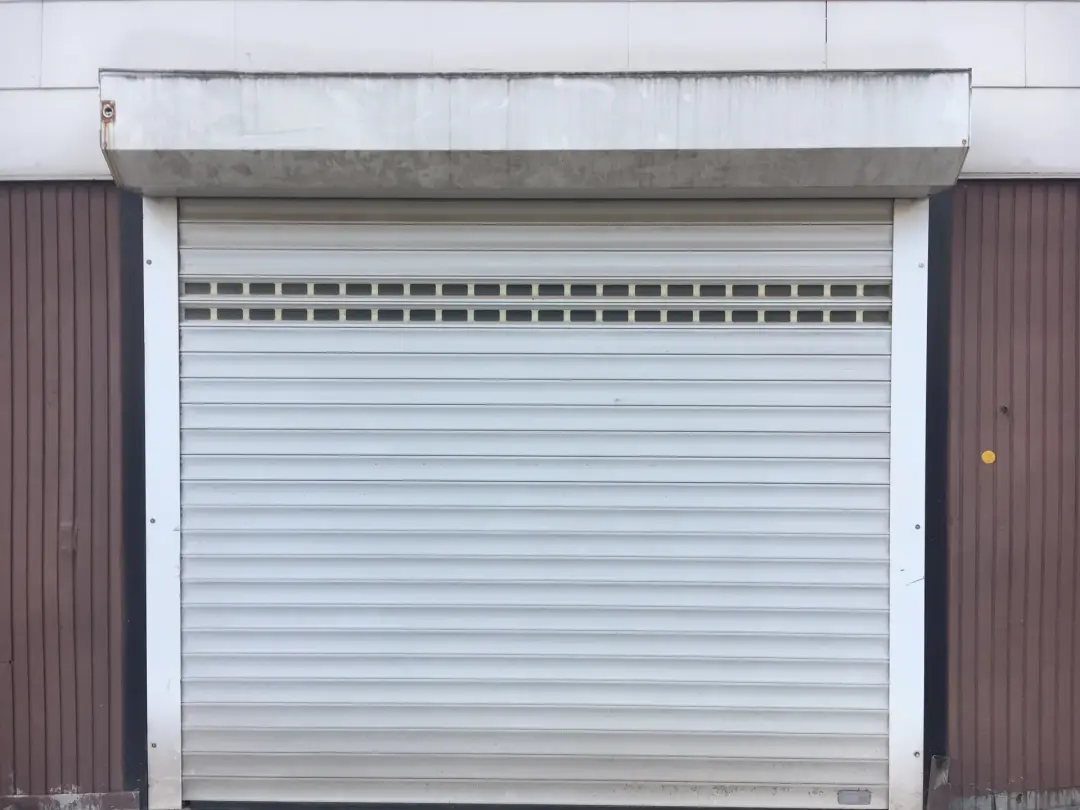
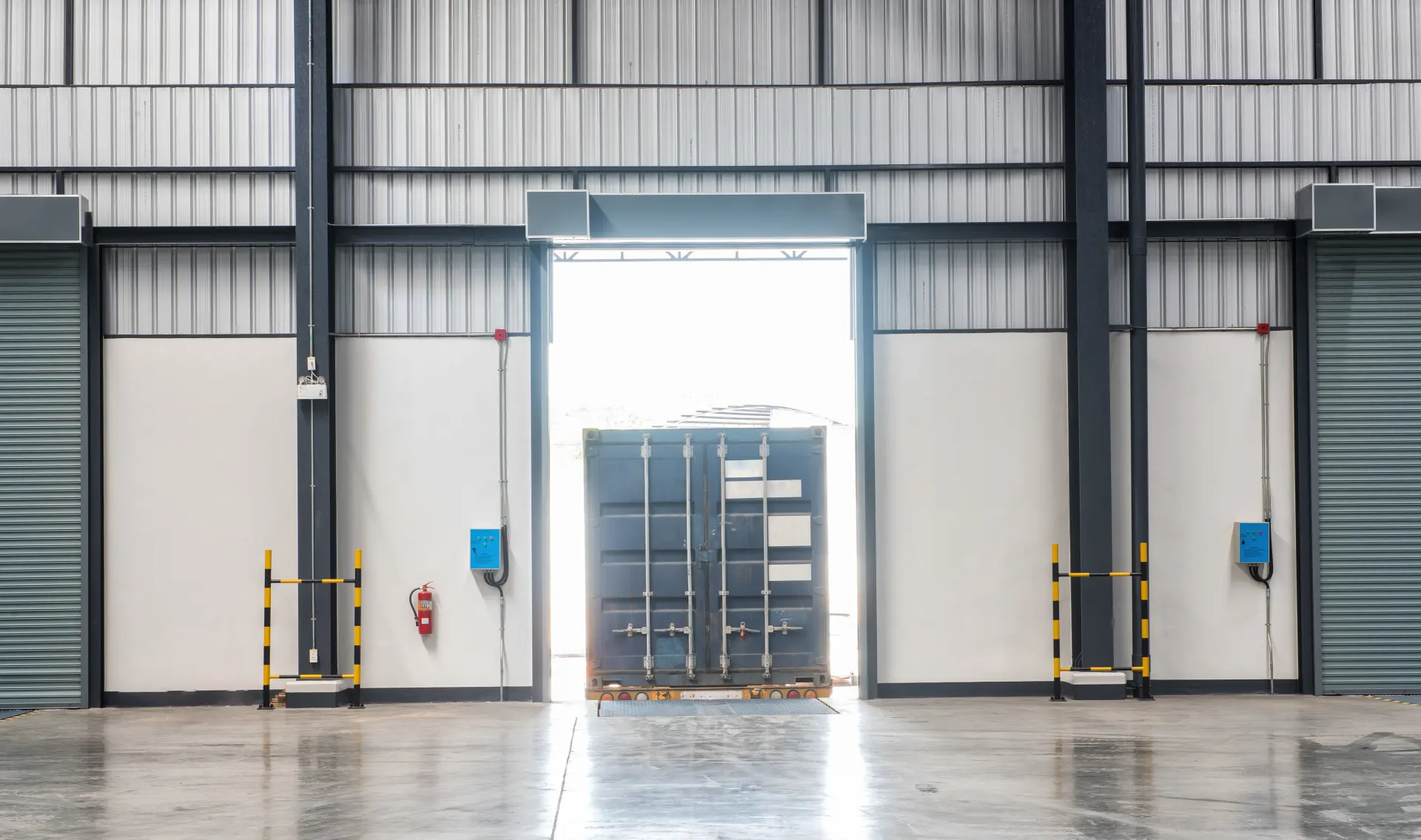
A loading bay door survey starts with the work the bay has to do. Record the vehicles, loads and people that use it, then ask the installer to check the available opening and its relationship with the dock equipment. That brief helps prevent a door which fits the wall from becoming a bottleneck in daily dispatch.
Measure the route from yard to warehouse
Ask the surveyor to record the narrowest and lowest point along the whole route. A drawing that gives the width between steel columns can miss protective bollards, dock-shelter pads and protruding brackets. Inside the opening, sprinkler pipes, cable trays or an existing motor can restrict where the new guides and drive can go. Separate the structural opening from the usable clearance after installation and agree both dimensions on the drawing.
Match the opening to the fleet
Make a list of the vehicle and load combinations the bay handles. Include hired trailers or seasonal vehicles where those regularly arrive. A warehouse may also handle a mix of trailers, rigids and vans with different deck heights. The Department for Transport recorded 163 million domestic journeys by GB-registered HGVs in the UK in 2025. Its breakdown by vehicle type shows articulated vehicles accounted for 63% of the tonnage lifted. Those are national freight figures. Your own dispatch records are the better evidence for specifying this bay. Source: Department for Transport domestic road freight statistics 2025.
Coordinate the door with the dock equipment
Draw the door, dock leveller, shelter and any vehicle restraint on the same plan. Check where each component sits through its full movement and identify who supplies the installer with its dimensions and control requirements. Where an interlock is proposed, agree what should happen when a component is unavailable, how operators see the status and who will verify the sequence after installation. Have the installer and dock-equipment contractor review the same brief so the boundary between their two scopes is clear.
Looking for commercial door services near you?
KGC Doors supplies, installs and repairs commercial doors across the Midlands, including:
Observe a busy dispatch window
Watch a normal peak from a designated safe location and record when vehicles wait, when the door is open and how pedestrians reach the office or yard. The Health and Safety Executive's workplace transport guidance recommends placing loading activities away from passing traffic and people who are not involved. Use what you observe to ask whether a separate pedestrian route or a different control position is needed. Include any temporary traffic arrangements for the installation in the same discussion. Source: HSE workplace transport safety guidance.
Allow for the bay to be unavailable
Ask which work can be completed before the existing door is removed. Agree when the bay will be handed over, how the opening will be secured if work spans a shift and whether the next bay can take the same vehicle types. Check the work window against booked dispatches and inbound stock. If the opening is your only route for a particular load, flag that early. A usable contingency might involve moving the installation to a quieter day or changing the order of work across several bays.
Make commissioning part of the order
Specify the information you want at handover. Ask for the measured clear opening, instructions for normal operation, service information and records of the applicable commissioning checks. Agree who will attend on behalf of dispatch and maintenance. A useful handover lets both teams see how controls are used, what warning indications mean and who should be called when the bay cannot operate normally. If the door shares controls with dock equipment, include those agreed scenarios in the demonstration.
What to send before the survey
Gather the bay number, available drawings, vehicle mix, normal hours, shifted or weekend dispatch periods and photos taken from a safe location. Mark the open questions for the engineer, including whether a wall, steelwork or service near the opening may obstruct the proposed door. Send any contractor access conditions separately so the installer can plan the visit. The survey can then spend its time resolving the physical constraints instead of reconstructing an ordinary working day from memory.
Summary
Prepare a bay brief that shows live traffic, required clearances and dock controls together. Agree the work window and handover checks before selecting the door. KGC Doors can discuss a survey for the opening and work through the installation constraints with your site team.