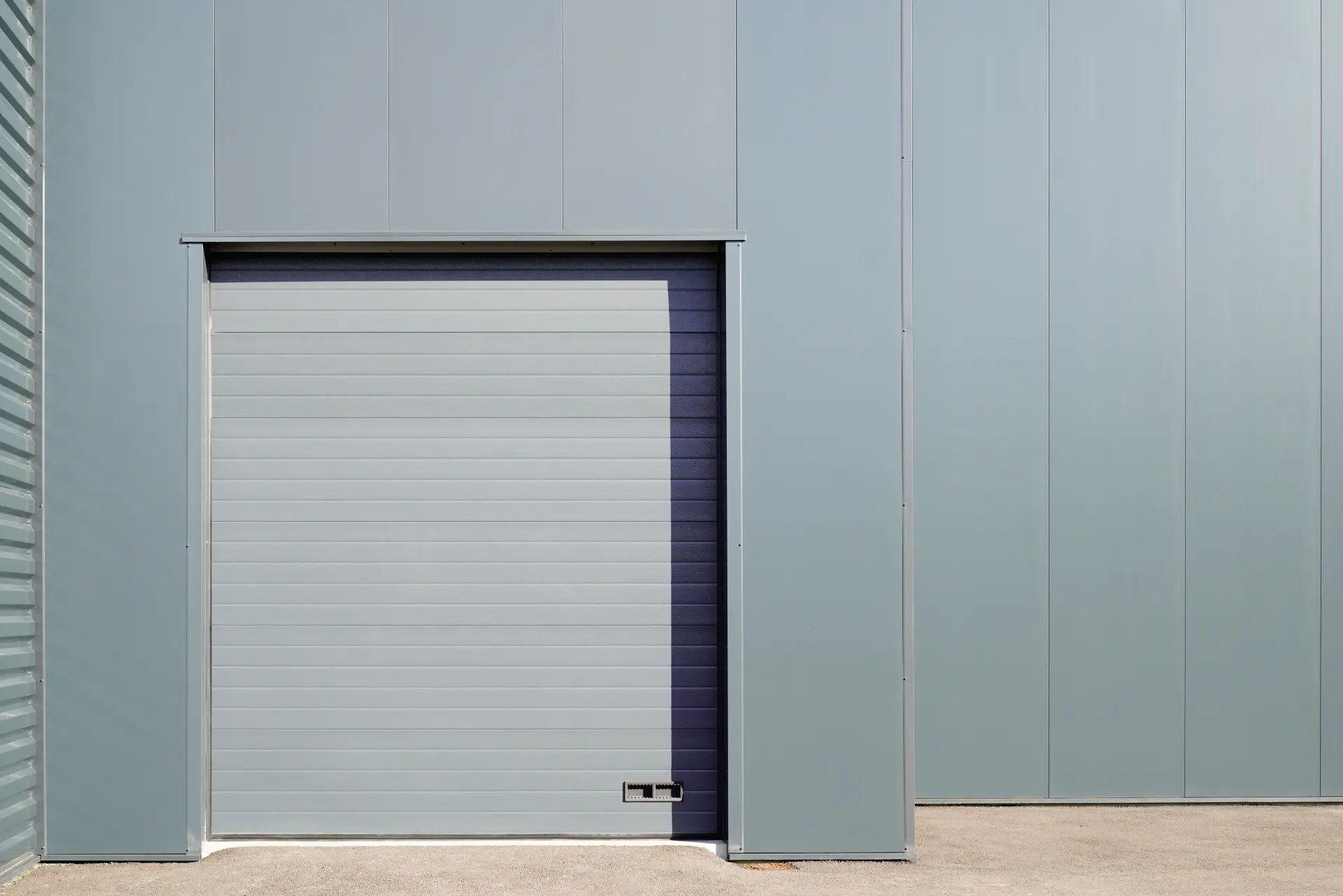
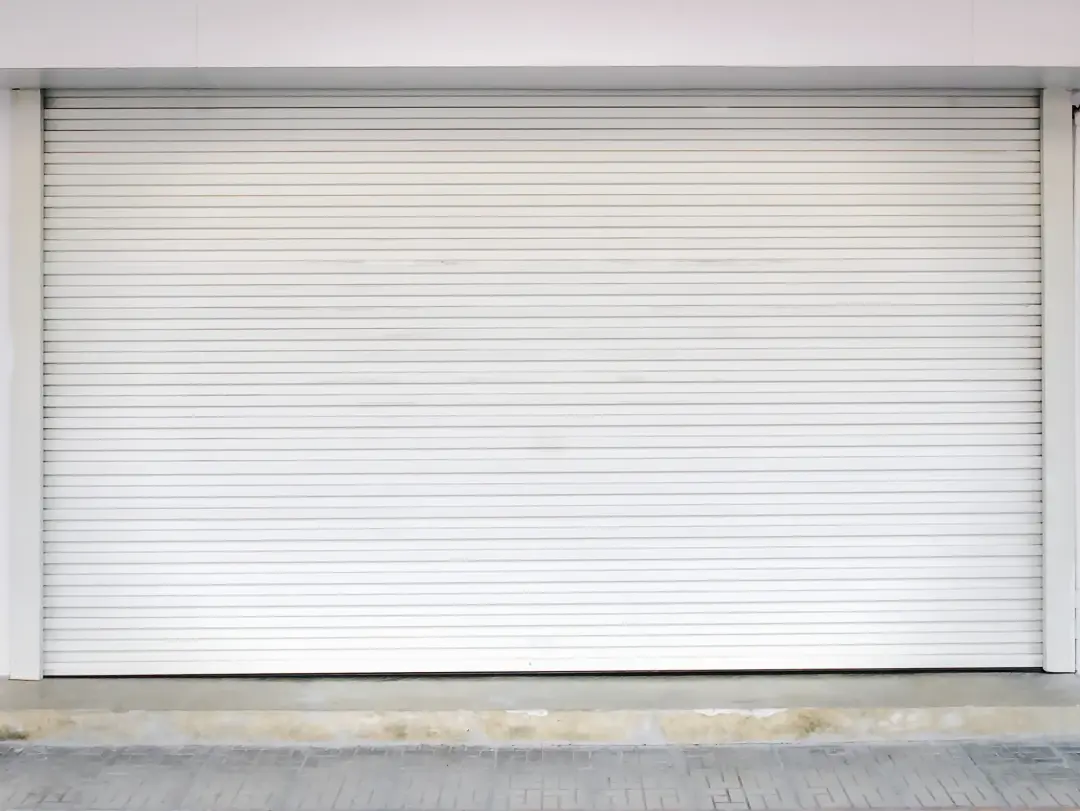
The best material for a roller shutter depends on the opening, the environment and the job the door must do. Steel and aluminium each have useful properties, while insulation, perforations and surface finishes change how the complete door performs. Compare the curtain alongside its guides, locks, controls and maintenance requirements.
Steel curtains for demanding sites
Steel is a familiar choice for commercial and industrial shutters because it can form a robust barrier over a wide opening. The slat profile and gauge should be selected for the span, anticipated use and exposure, rather than chosen from a material label alone. A heavier curtain also places demands on the barrel, guides, springs and motor. Ask how the door has been sized as a complete system.
Galvanised steel has a practical finish that helps resist corrosion. It is often suitable for loading bays, workshops and storage entrances where appearance is secondary to durability. It still needs care: damaged coating, trapped water and contaminants can expose the metal beneath. A regular inspection should include the bottom rail and guides, where wear and moisture are easy to overlook.
Aluminium when weight or appearance matters
Aluminium curtains can be lighter than comparable steel designs and offer a neat finish for retail or commercial frontages. Some profiles can include perforated or vision sections so a display remains visible after closing. That visibility can be valuable to a shop, but it also changes privacy and security considerations. Ask for the actual product specification instead of assuming every aluminium shutter has the same strength.
A lighter material does not remove the need for suitable fixings and guides. The surrounding wall, opening size, wind exposure and locking arrangement all influence performance. On a prominent frontage, look at the colour and profile from the pavement as well as from inside the premises.
Insulated slats and seals
Insulated shutters typically use a slat construction that reduces heat transfer through the closed curtain. Seals around the edges and at the threshold matter too. A large door that stays open for long periods will still exchange air with the outside, so operating habits and closing speed can be as important as the curtain specification.
For context, Ofgem's 2025 survey found that 27% of businesses with non-domestic energy contracts struggled with bills in some way. The survey did not test roller shutters or quantify their savings. It does explain why a heated business might compare insulated and uninsulated options carefully. Source: Ofgem, Businesses and the energy sector: 2025.
Choose a finish for the environment
Powder coating offers a broad choice of colours for shopfronts and branded buildings. Galvanised finishes are common on functional industrial doors. Ask what preparation and coating system is proposed, how colour matching is handled and what cleaning products the manufacturer permits. Scratches should be repaired in line with the finish guidance before corrosion spreads beneath the coating.
A coastal, damp or chemically aggressive setting can need a different specification from a dry indoor opening. Consider the bottom edge, fixings and any components exposed to cleaning chemicals. The finish should be chosen for the conditions it will face, not just the colour chart.
Specialist options need separate evidence
Perforated shutters can offer visibility and ventilation, but the opening pattern affects privacy and the level of protection. Fire shutters are a different specialist category: where required, ask for the tested rating, suitable controls and an inspection plan aligned with the building's fire strategy. Ordinary steel or aluminium shutters do not become fire rated because they look solid.
Compare solid, perforated and vision profiles
A solid curtain blocks views into a building and can give a simple appearance. Perforated or punched sections allow some visibility and ventilation, which can help a retail display remain visible after closing. The opening pattern and any backing material should be chosen for the actual use: a showroom may value visibility, while a stockroom may prefer privacy. Ask what the profile looks like from both sides when the shutter is down.
The choice also affects cleaning. Openings in a perforated section can collect dirt, and a highly visible shopfront finish may need more frequent cleaning than an industrial bay. Discuss whether the shutter will be exposed to road spray, dust or cleaning chemicals. A profile that looks suitable in a catalogue may need a different maintenance routine at your site.
Understand the parts behind the visible finish
The curtain is only one part of a roller shutter. Side guides, the bottom rail, barrel, drive and fixings all need compatible materials and suitable protection. A coated curtain paired with exposed, corroding fixings can still develop trouble. Ask whether the specification covers each component and whether replacement slats or finish-matched parts are available.
On a powered installation, controls and safety devices must also suit the environment. A warehouse switch may need protection from vehicle impact; an external control may face rain and tampering. HSE notes that the safety of a powered door depends on how components such as switches, sensors, controllers and motors work together. It also stresses the need to account for wear and environmental conditions. HSE guidance on powered door safety.
Make finish care part of the handover
Before accepting the door, ask for written cleaning and touch-up instructions. Check which cleaners are suitable for the coating, whether abrasive pads should be avoided and how promptly scratches should be repaired. A finish may fail early if repeated impacts are treated only as cosmetic damage. Where a forklift or trolley regularly touches the door, changing the traffic layout or adding protection may do more for its life than repainting it.
Record the original finish name or colour reference with the door documents. If one slat is replaced later, that record helps match the repair to the rest of the curtain. It also makes future maintenance less dependent on guesswork.
Decide on the whole installed door
A durable curtain can be undermined by unsuitable guides, poor fixings or controls that do not fit the site. Compare quotes on the complete assembly, including the expected opening cycles, weather exposure, locking, operation and future servicing. HSE notes that powered doors and gates need maintenance because components can wear and fail; that should be part of the ownership plan. Source: HSE, Ensuring powered doors and gates are safe.
KGC Doors supplies manual, electric, insulated and security shutters for businesses across Birmingham and the Midlands. To compare materials and finishes for your Birmingham opening, see our roller shutters service in Birmingham.
Ask for a shutter specification
roller shutters birmingham