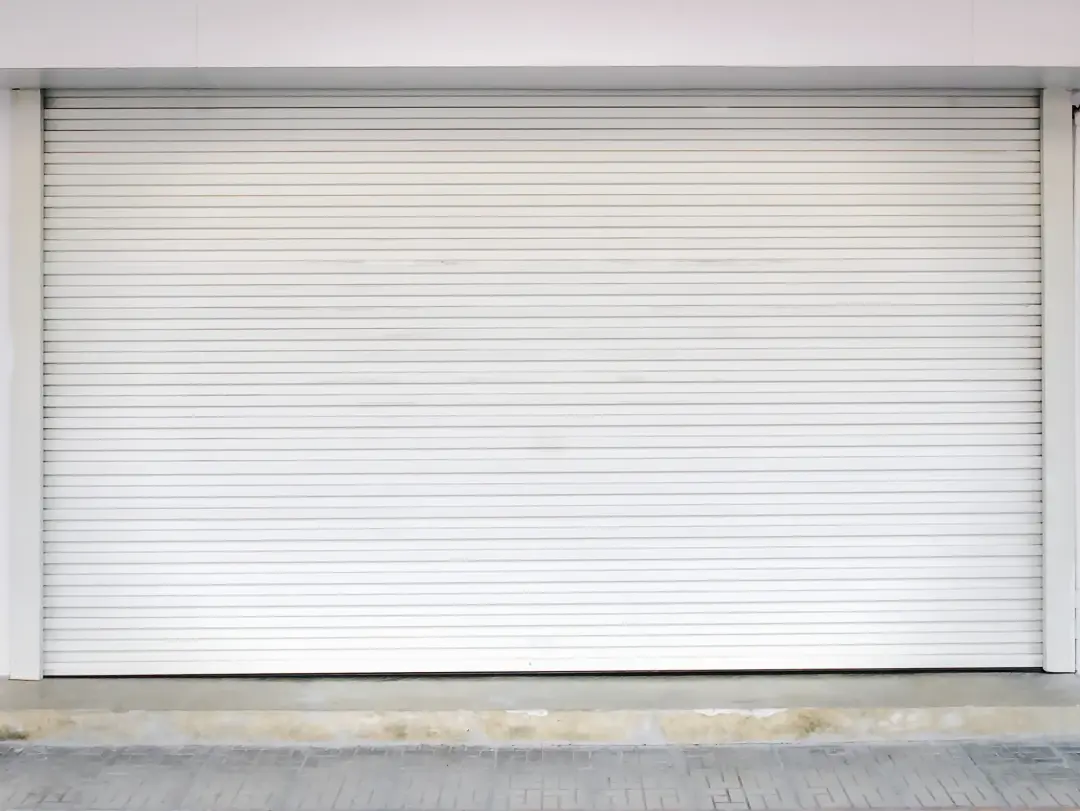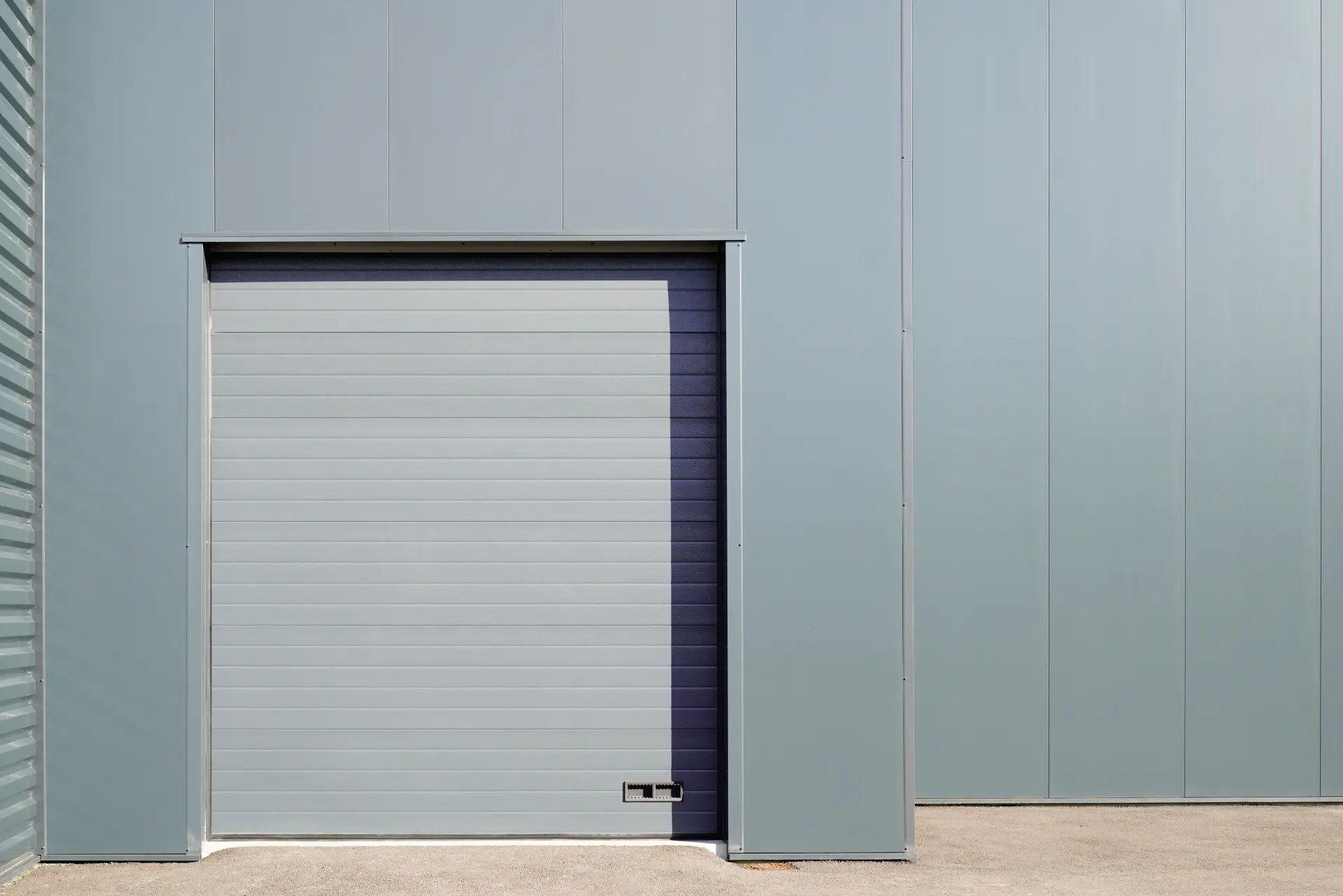
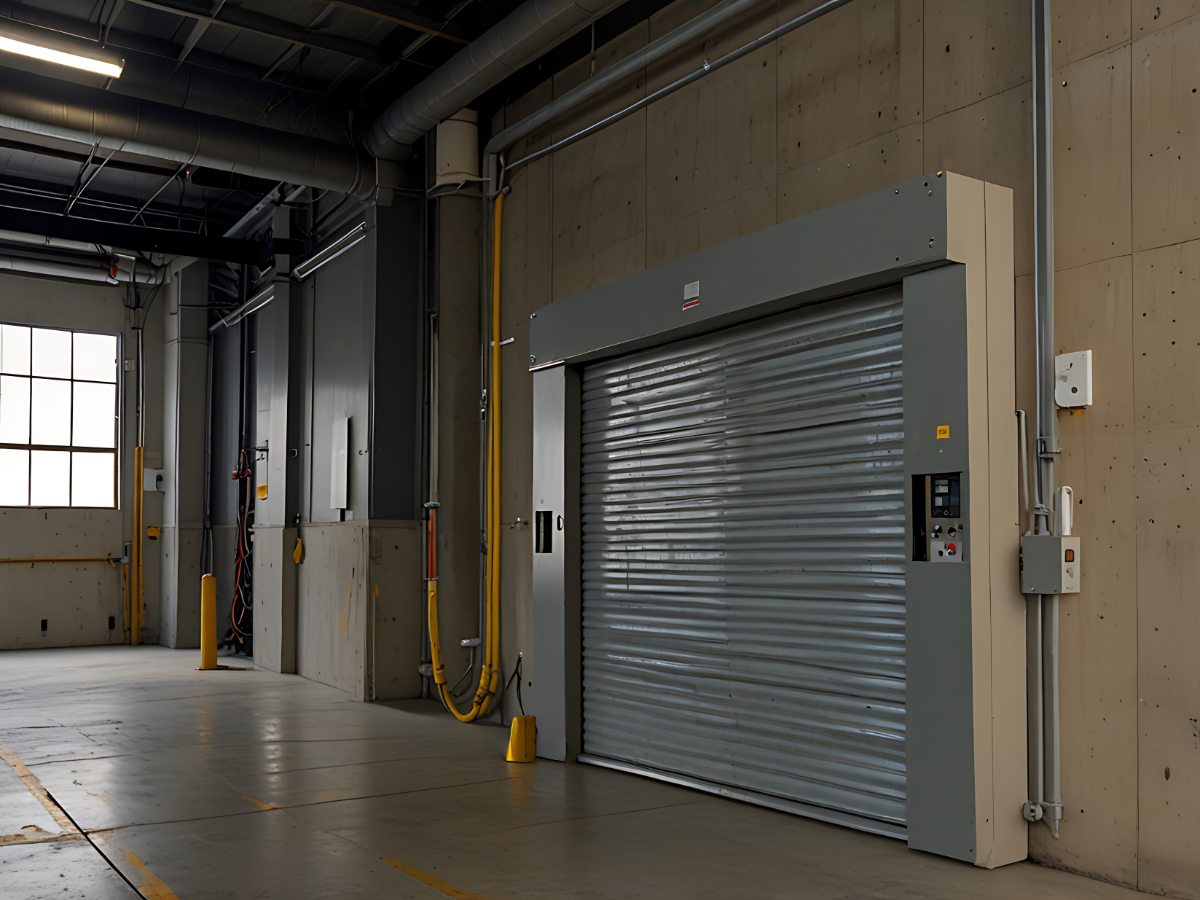
A roller shutter improves building security by putting a substantial physical barrier across a vulnerable opening. It can protect glazing, conceal goods and make forced entry more difficult. The best result comes from treating the curtain, guides, locks, controls and surrounding structure as one system, then maintaining that system so the door still closes securely.
Secure the opening, not just the curtain
A curtain rolls into side guides and closes across a shopfront, service bay or warehouse entrance. Its strength matters, but so does the structure holding it. If guides are fixed into weak masonry or the bottom edge leaves a gap, the door may not deliver the protection expected from its material. Ask the installer to assess the opening and its fixings before recommending a profile.
Wide industrial openings also need attention to wind loading. A door that flexes or leaves its guides in severe weather can become a safety and security problem. The correct guide arrangement and curtain specification depend on the span and exposure, so they belong in the survey and quotation.
Choose locking and controls carefully
Manual shutters and electric shutters can use different locking arrangements. An electric door also needs controls placed so authorised staff can operate it while unauthorised people cannot. Decide who holds remotes or keys, what happens when a staff member leaves and how the door is secured after a power cut. Convenience should not create an easy route to opening the shutter.
A separate pedestrian entrance can reduce the number of times a large shutter must be raised. On a busy site, that can make it easier to keep the main bay closed when no delivery is expected. Staff should have a clear closing routine that includes checking the full travel of the curtain and the final locking position.
Use shutters with other security measures
A shutter can delay entry, but it is only one layer. Lighting helps staff and cameras see the entrance. An alarm can signal an attempted break-in, while CCTV may help establish what happened. Stock placement matters too: valuable goods visible from outside can increase attraction even when a shutter is fitted. Choose visibility through a perforated shopfront curtain deliberately.
This is a practical concern for businesses. In the year ending March 2026, police recorded 223,456 burglaries in England and Wales, including both residential and non-residential premises. The figure is not a local business burglary rate and does not measure the effectiveness of shutters. It is national context for assessing physical entry points. Source: Office for National Statistics, Crime in England and Wales: year ending March 2026.
Fit the door to the business
A retail frontage, self-storage unit and factory yard have different risks. A shop may need a shutter that balances display visibility with after-hours protection. A warehouse may prioritise wide vehicle access, robust guides and quick closure after deliveries. Discuss how the building is occupied, what is stored there and how often the opening is used, rather than selecting the thickest-looking curtain by default.
If fire protection is also required, request a separately specified, tested fire shutter that fits the building's fire strategy. A security shutter is not automatically a fire barrier. Likewise, a door should not obstruct emergency exits or everyday pedestrian access.
Check the routes around the shutter
A shutter over the main entrance does little if an adjoining service door is left weak or propped open. During a survey, identify every practical route into the premises, including side doors, windows, roof access and the loading yard. The goal is a consistent level of protection, not the largest possible shutter on one opening. Staff also need a simple procedure for checking that each entrance is secured at closing time.
The shutter's location matters. An external curtain may shield glazing from impact, while an internal installation may have a different effect on the appearance of a shopfront. Ask how the chosen arrangement will be fixed and how it can be serviced without disrupting the business. A survey should also identify signage, lighting and any obstacles that could prevent full travel.
Make closing a repeatable routine
A security door is only useful when it is fully closed. Agree who is responsible for closing it, where keys or remotes are stored and how a failed closure is reported. At the end of the day, staff should be able to see whether the bottom rail has reached the intended position and whether the lock has engaged. A routine that depends on one person's memory is more fragile than a brief written check.
In a warehouse or yard, keep the track and threshold free of pallets, rubbish and parked equipment. Obstructions can stop a curtain before it reaches the bottom, creating a gap that may be missed from inside. Avoid leaving a powered shutter in automatic use if a protective device is known to be faulty; arrange repair and follow the site's safe access procedure.
Recognise the limits of a shutter
No shutter can guarantee that an attempted break-in will fail. The aim is to make the opening harder to attack and to buy time for detection and response. A security claim should be supported by the actual product and installation specification, not by a vague label such as 'heavy duty'. If an insurer has requirements, ask for those in writing before ordering so the proposed door can be checked against them.
Security also has to coexist with safe operation. The shutter should not obstruct a required exit, and powered movement needs suitable protection for people using the entrance. A sensible specification weighs both risks instead of improving one by creating the other.
Maintenance preserves the security benefit
Damage can turn a good barrier into a weak one. Bent slats, loose guides, worn locks or unreliable controls may stop the curtain reaching its closed position. Staff should report new noise, scraping or uneven movement promptly and avoid forcing a jammed shutter. After a vehicle strike or attempted break-in, arrange an inspection before normal use resumes.
HSE advises that powered doors and gates need maintenance to remain safe because their components can wear and fail. A service visit can also identify alignment and closing problems that affect security. Source: HSE, Ensuring powered doors and gates are safe.
KGC Doors supplies, installs, repairs and services commercial shutters. For an entrance in Wolverhampton or the wider Midlands, review its industrial roller shutter doors Wolverhampton service. industrial roller shutter doors Wolverhampton