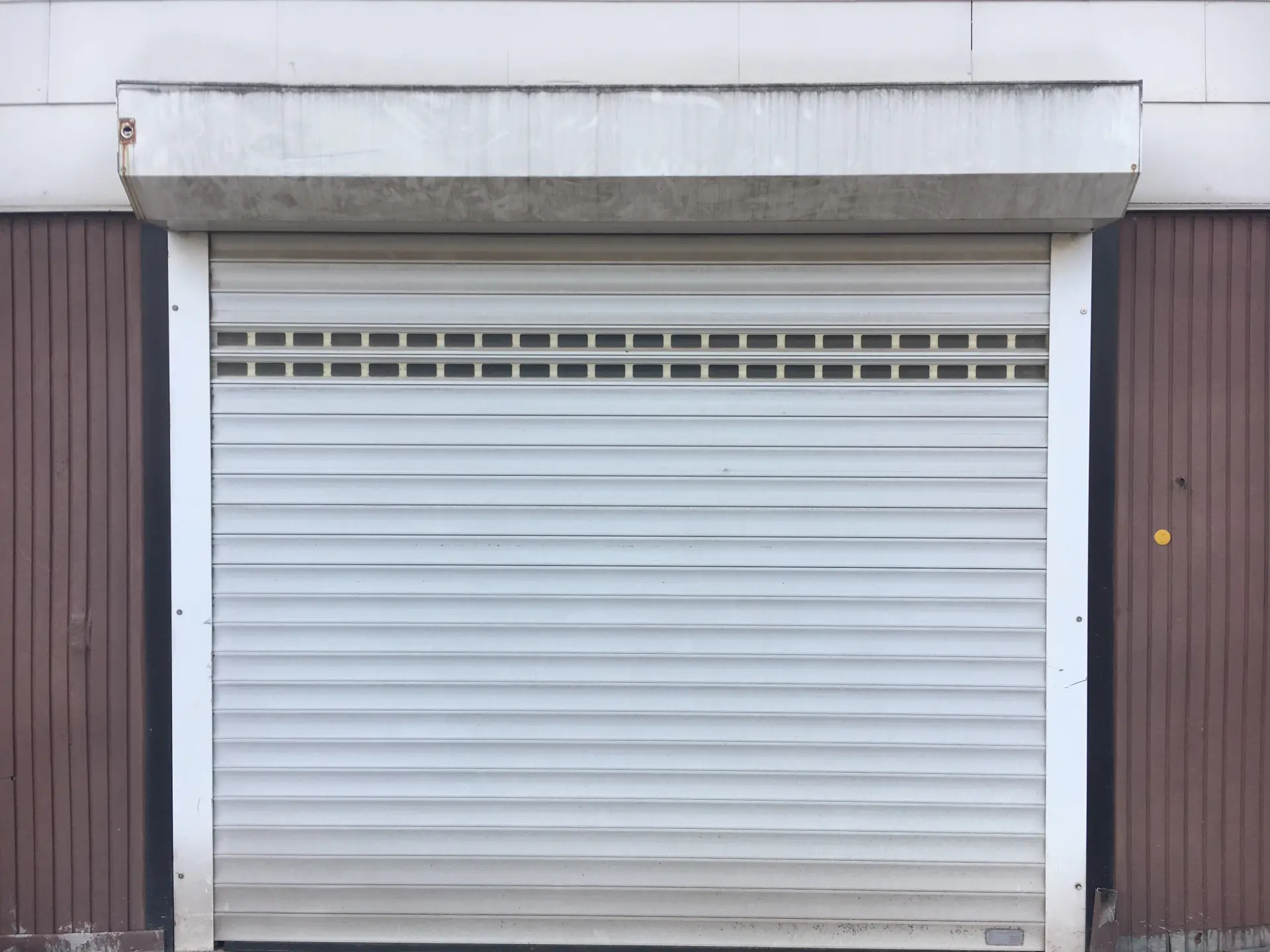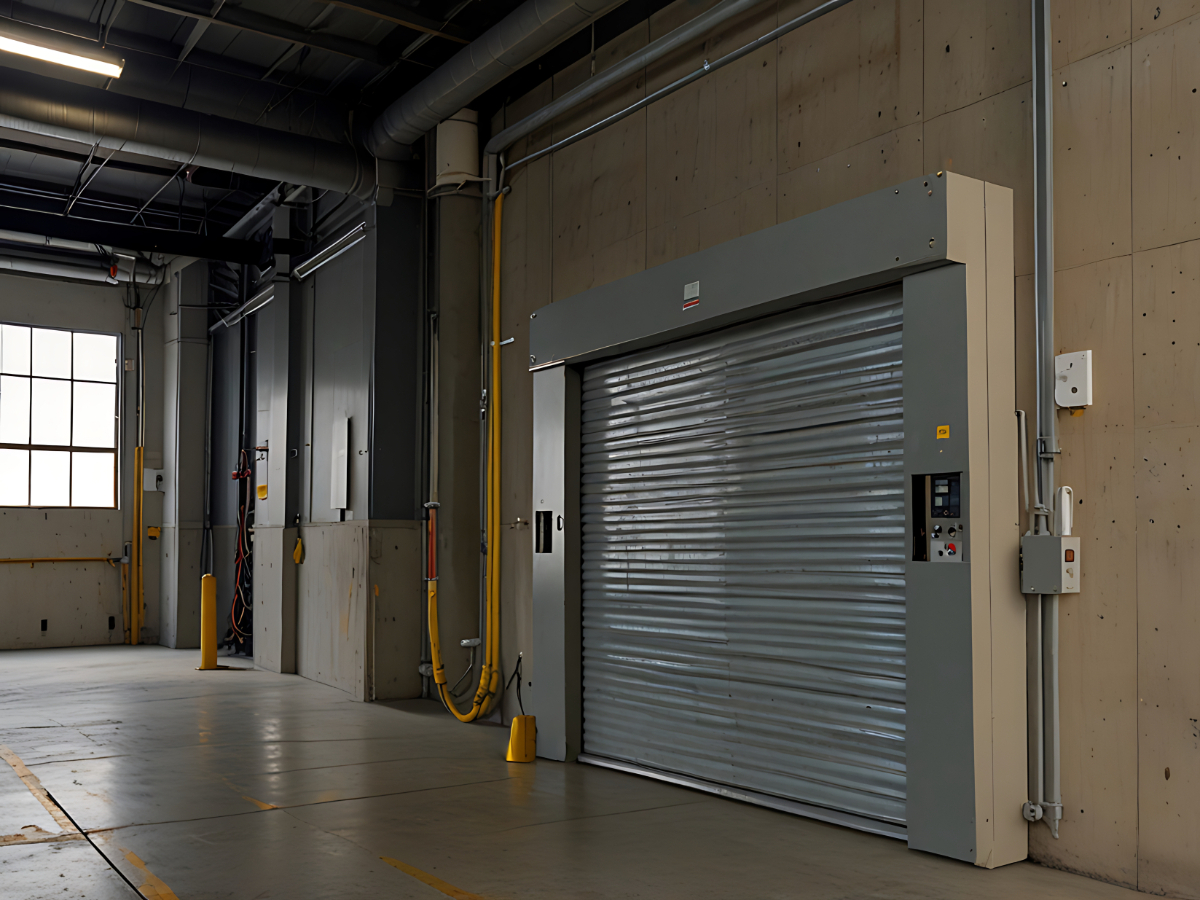
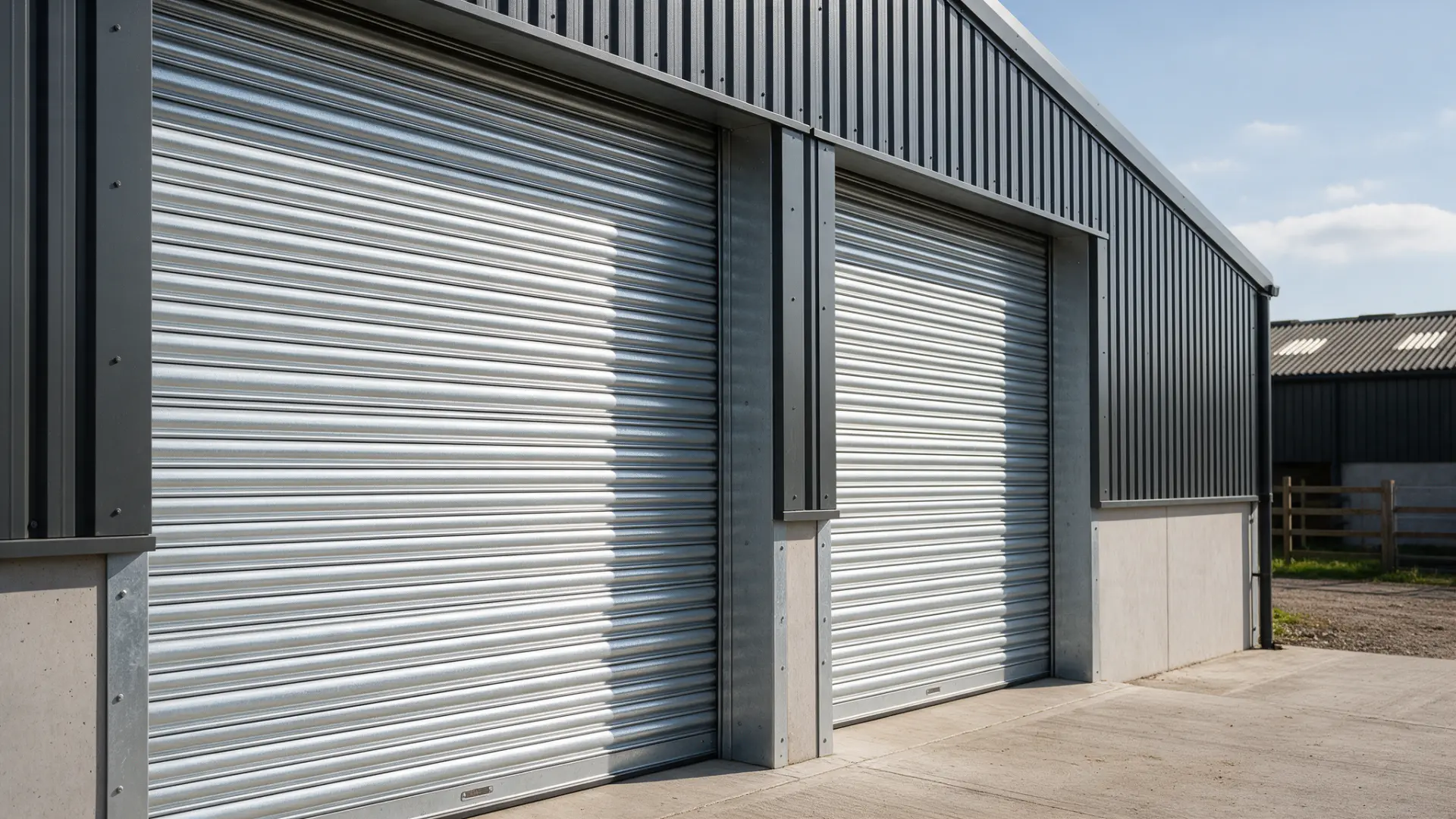
Fire safety should be part of the decision when choosing doors for an agricultural building, especially where machinery, fuel, electrical equipment or stored materials increase the risk.
Door placement and operation can affect how quickly people can leave and how emergency crews reach the building. It is also important to check any fire safety requirements that apply to the building’s use.
Fire Safety for Agricultural Buildings
Fire and rescue services in England attended 177,219 fires in the year ending September 2025, 33% more than the previous year. This is a figure for all fire types, not agricultural buildings, but it underlines the value of prevention and a workable emergency plan. Source for this statistic.
Agricultural building doors affect escape, separation of fire and smoke, and access for emergency crews. The right choice follows the building’s fire-risk assessment. An ordinary secure or insulated door should never be assumed to provide fire resistance.
Use the fire-risk assessment
Doors should follow a site-specific assessment of people at risk, ignition sources, combustible materials and possible routes for fire and smoke. Review the assessment when storage, charging, hot work, visitors or building use changes. A familiar farm shed can become a different risk as its operation evolves.
Prevent ignition
Electrical faults, vehicle defects, charging, heaters and hot work all deserve controls before a door specification is considered. Maintain equipment, separate hazardous activities and keep combustible material from ignition sources. A door cannot compensate for poor housekeeping or an unsafe storage arrangement.
Know what a fire door is
A fire-resisting door is a tested system of leaf, frame, seals, ironmongery, glazing and installation details, rather than simply a heavy, insulated or secure door. Where compartmentation is required, obtain competent advice and do not assume a normal security door provides the intended fire or smoke performance.
Keep escape independent
People must be able to leave without relying on a powered vehicle door or a key that cannot be found quickly. A large roller, sliding or high-speed door may be useful for normal access but should not automatically be the only escape provision. Consider smoke, power failure and a stalled mechanism.
Protect closing devices
A door intended to resist fire or smoke cannot work as designed when wedged open, damaged or modified without control. Inspect closers, seals, hinges, latches and clearances. Do not drill, trim, glaze or add hardware to a fire-door set without checking compatibility.
Induct staff and visitors
Contractors, drivers and seasonal workers may not know the route to safety or the building’s hazards. Give an induction appropriate to their visit, keep escape routes clear and signposted, and make sure security arrangements cannot trap somebody inside during an emergency.
Maintain emergency access
Firefighters may need to identify the correct building, reach it, understand gates and know about hazardous contents. Keep access roads and turning areas available, avoid parking against exits and establish how site information and emergency contacts are kept current.
Manage smoke and airflow
Doors influence the movement of smoke and air, particularly between compartments or connected storage spaces. The fire strategy should determine which doors are kept closed and who may operate them. Opening a large entrance without a plan can change conditions quickly.
Inspect powered doors
Powered access equipment needs safety maintenance in addition to the fire considerations of the building. Give users clear instruction on ordinary operation, isolation and reporting faults. Keep the movement path free of stock and make emergency procedures known to likely users.
Get competent advice
The right measures depend on occupancy, layout, operations and legal duties, so generic advice cannot replace a specific assessment. Record decisions, inspections, service information and later changes. Consult competent fire-safety and door professionals where fire-resisting or powered solutions are involved.
Fire precautions around the doorway
- Separate combustible storage: Hay, straw, packaging, feed and waste need storage arrangements that respect ignition sources, escape routes and the fire-risk assessment. Do not allow convenience storage to narrow a route to a door.
- Control battery charging: Charging areas need appropriate management, ventilation and separation based on the equipment and risk assessment. A door should not be the only measure separating a charging risk from people or combustibles.
- Manage hot work formally: Welding, grinding and cutting create risks that can persist after the visible work ends. Use permits or equivalent controls, clear combustibles and inspect the area after work.
- Keep fire doors closed as intended: A fire-resisting door can only contribute when its closing and latching arrangements work. Do not defeat it with wedges, makeshift catches or unapproved modifications.
- Test emergency arrangements: People need to know who calls emergency services, where they assemble and how the site is accessed. Practise or review the plan when staff, buildings or activities change.
- Protect signage and lighting: Escape signs, emergency lighting and door markings should remain visible, not hidden behind seasonal storage, advertising or parked machinery.
- Record checks and repairs: A record of inspections, door damage and service work helps prove that faults were addressed and helps the next responsible person understand the building.
- Coordinate with insurers and advisers: Insurers, fire-risk assessors and door specialists may identify different but complementary requirements. Resolve them before making changes to doors, compartments or access routes.
- Treat doors as part of a system: A sound door cannot compensate for blocked routes, poor housekeeping or unsafe storage. Fire safety works when prevention, detection, escape, access and maintenance are considered together.
Fire-door and access checklist
- Update the fire-risk assessment when building use, storage, charging or hot-work activities change.
- Keep hay, straw, packaging and waste clear of exits, electrical equipment and door travel paths.
- Confirm whether an opening requires a tested fire-resisting door set rather than a standard security door.
- Inspect leaves, frames, closers, seals, hinges and latches for damage or unauthorised modification.
- Ensure people can escape without relying on a powered vehicle door or an unavailable key.
- Keep escape routes, signage, emergency lighting and assembly information visible and unobstructed.
- Brief contractors, delivery drivers and seasonal workers on hazards, exits and the assembly point.
- Maintain access routes, gates and turning areas so emergency services can reach the building.
- Record hazardous storage and contact information in a way that can be accessed during an incident.
- Control hot work, charging and fuel handling using arrangements suited to the specific site.
- Test fault reporting and emergency isolation procedures for any powered door or shutter.
- Review fire safety after incidents, near misses or changes to layout instead of treating it as annual paperwork only.
After a fire or near miss
Do not simply reopen the building and resume the previous routine. Check whether heat, smoke, water, impact or forced entry has affected doors, closers, electrics, controls and escape routes. Record what happened, preserve relevant evidence and ask competent people to assess any door set that may have been exposed.
Review the incident with staff and contractors: the most valuable outcome is a practical improvement to storage, hot-work controls, access, maintenance or the emergency plan. A near miss deserves the same thoughtful review because it may reveal a failure before somebody is harmed.
What to do next
Review the fire-risk assessment with a competent adviser before changing an entrance or a fire-resisting door set. Check escape, storage, door condition and emergency access together, and record the decisions so future users know how the building is meant to operate.
KGC Doors offer bespoke design and installation for agricultural doors in Wolverhampton, Birmingham, Derby and across the Midlands. Discuss the opening and daily use with an experienced installer.